
Parliament Session July 29, 2025: The Great National Security Debate – Op Mahadev, Op Sindoor & The Pahalgam Attack
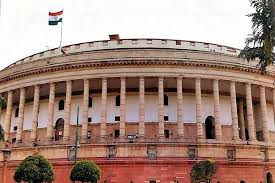
India’s Parliament witnessed a day of high-pitched, emotional, and politically charged debate on July 29, 2025. Both Houses were consumed with discussions surrounding Operation Mahadev, Operation Sindoor, and the tragic Pahalgam terror attack of April 22. From fiery speeches by the Prime Minister and Opposition leaders to strong condemnations and counter-allegations, the day highlighted both unity and division over national security and strategic responses.
The Pahalgam Terror Attack
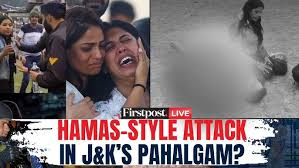
The trigger for the intense debate was the April 22 terror attack in Pahalgam, Jammu & Kashmir, where several pilgrims and security personnel lost their lives. The attack shocked the nation and became a flashpoint for renewed calls for accountability, action, and justice. This tragic event led to Operation Mahadev—a focused counter-terror operation within Indian territory—and later Operation Sindoor, a cross-border precision strike by Indian forces.
Union Home Minister Amit Shah Sets the Tone
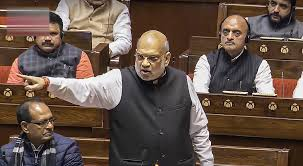
Home Minister Amit Shah kickstarted the debate in the Lok Sabha by presenting details of Operation Mahadev, confirming that three terrorists linked to the Pahalgam attack were neutralized. He condemned the Congress, particularly senior leader P. Chidambaram, for demanding proof that the attackers were from Pakistan, calling it an insult to the nation’s intelligence agencies.
Shah strongly asserted the intelligence inputs were “clear and actionable” and that Mahadev was executed with surgical precision in Jammu & Kashmir. He defended the government’s counter-terrorism stance while suggesting that questioning such operations gives a moral boost to India’s enemies.
Opposition Counter-Attacks: Akhilesh Yadav, Priyanka Gandhi, and Rahul Gandhi Speak Up
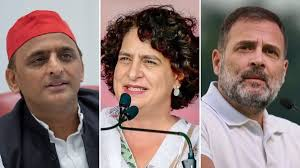
The Opposition was quick to respond. Akhilesh Yadav, Samajwadi Party Chief, raised questions about the timing of Operation Mahadev, suggesting it was strategically launched for political mileage. He also highlighted the “intelligence lapse” that allowed the Pahalgam attack to occur, demanding accountability.
Priyanka Gandhi, Congress General Secretary, echoed these concerns and criticized the absence of security personnel at the time of the Pahalgam attack. “How could such a brutal attack happen if the area was under surveillance?” she asked, demanding answers the previous day’s Defence Minister’s speech did not address.
Rahul Gandhi’s Dual Tone: Unity and Criticism
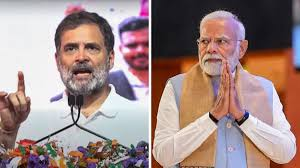
Rahul Gandhi’s speech in the Lok Sabha took a nuanced approach. He began by reiterating the Opposition’s unconditional support to the armed forces. “Even before Operation Sindoor began, the Opposition had resolved to stand like a rock behind the Army and the elected government,” he declared.
However, he quickly pivoted to a blistering attack on the Modi government:
- He questioned why Pakistan was informed within 22 minutes of the launch of Operation Sindoor.
- He alleged that Indian pilots were told not to strike Pakistani air defence systems, thereby compromising the mission.
- He dared PM Modi to publicly call US President Donald Trump a “liar” over his ceasefire mediation claims between India and Pakistan.
Rahul also invoked historical examples, contrasting today’s leadership with Indira Gandhi’s decisive stance during the 1971 war. He emphasized the need for full operational freedom for the armed forces, suggesting today’s political environment was too controlling. https://www.youtube.com/live/8Y4vet1YAf8?si=QEPcEtf6cmnjM2wD
PM Modi’s Fiery Rebuttal
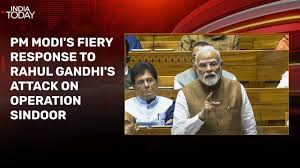
At around 7:00 PM, Prime Minister Narendra Modi entered the Lok Sabha and delivered a hard-hitting address defending the government’s actions and attacking the Opposition.
Key Highlights from PM Modi’s Speech:
- Operation Sindoor’s Success:
- Modi proudly declared that India had “avenged April 22 in 22 minutes”, praising the armed forces.
- He confirmed that Pakistani airbases were still “in ICU”, indicating heavy damage.
- He assured that Operation Sindoor is not over and “will continue till Pakistan stops exporting terrorism”.
- Exposing Opposition Doubts:
- He criticized the Opposition for questioning the timing of Operation Mahadev.
- He said Congress had become a spokesperson for Pakistan’s propaganda.
- He accused some leaders of being “barred from speaking” in Parliament because they praised India on international platforms.
- On Trump’s Ceasefire Mediation Claim:
- Modi flatly denied any international pressure. “No leader in the world asked us to stop,” he said, discrediting Trump’s claim of mediation.
- He humorously noted how Pakistan’s DGMO called India during the strike saying, “Bas karo… bohot maara.”
- Indus Water Treaty and Historical Blunders:
- The Prime Minister labeled Jawaharlal Nehru’s signing of the Indus Water Treaty as one of India’s biggest diplomatic mistakes.
- He also slammed Congress for allowing the partition of Kashmir (PoK) and for the Batla House encounter reaction, claiming a senior Congress leader had “tears in her eyes” for terrorists.
- Aatmanirbharta in Defence:
- Modi emphasized that Indian-made arms were gaining popularity globally.
- He hailed India’s self-reliance in defence as a game-changer in global geopolitics.
Congress & Allies: A Parallel Narrative
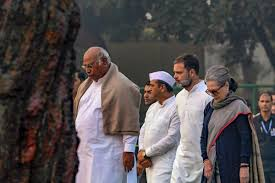
Despite PM Modi’s strong remarks, the Opposition leaders continued their criticism:
- Mallikarjun Kharge, Congress President, demanded Amit Shah’s resignation for the security lapse in Pahalgam.
- He cited J&K Lt. Governor Manoj Sinha’s admission that the attack was a “major lapse.”
- Kharge also questioned why PM Modi remained silent when BJP ministers allegedly insulted the armed forces.
DMK MP Kanimozhi accused Shah of diverting attention instead of addressing security failures. AAP MP Sanjay Singh criticized the PM for attending a poll rally in Bihar shortly after the Pahalgam attack.
Rajya Sabha Highlights
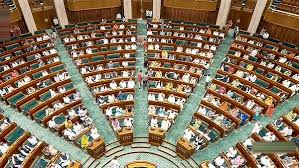
While the Lok Sabha debates dominated headlines, the Rajya Sabha was no less dramatic:
- P. Chidambaram doubted the decisiveness of Operation Sindoor, calling it “successful but not necessarily decisive.”
- He also questioned why the PM never publicly responded to Trump’s remarks on mediation.
The Upper House session ended with JP Nadda’s fiery speech branding Modi as “the world’s most popular leader,” leading to protests. He later withdrew a controversial remark about Kharge and offered an apology, allowing proceedings to continue.
Conclusion: A Day of National Reckoning and Political Theater
The Parliament session on July 29, 2025, will be remembered as a watershed moment in India’s national security narrative. While Operation Sindoor and Mahadev have reignited nationalistic fervor, the political tug-of-war has exposed the deep ideological divide on how terrorism, intelligence, and foreign policy should be handled.
Despite the bitterness, one thing was clear: India’s Armed Forces enjoy unanimous respect. However, the civilian leadership’s choices, timing, and communication remain areas of fierce debate.
In the days to come, the impact of these debates may shape not only public opinion but also the trajectory of India’s defense and diplomatic policies. As the government doubles down on security, retaliation, and self-reliance, the Opposition is equally adamant on accountability, transparency, and strategic clarity.