
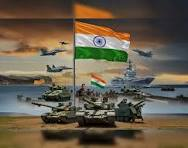
India’s Defence Renaissance: Indigenous Weapons, Drones, and Self-Reliance Take Center Stage
Published on: July 27, 2025
By: Vikramsinh Patil

Introduction
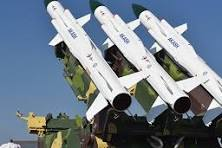
India’s defence sector is witnessing a powerful transformation driven by indigenous innovation, strategic defence procurements, and cutting-edge technologies. The momentum gained through Operation Sindoor has propelled India’s resolve to rely more on homegrown military systems and reduce foreign arms dependency.
From advanced drones to state-of-the-art artillery and anti-drone systems, India’s military preparedness is not only evolving but also sending a strong message globally: India is ready, self-reliant, and future-focused.
Operation Sindoor: A Showcase of Indigenous Might
In the recent Operation Sindoor, Indian armed forces demonstrated remarkable tactical superiority by deploying a wide range of indigenous weapons systems, significantly boosting national morale and global attention.

Prime Minister Narendra Modi emphasized the critical role of “Make in India” defence technologies during the operation, spotlighting how homegrown solutions effectively countered terrorist threats while strengthening the national economy.
Key technologies used:
- ALS-50 Drone: Indigenous loitering munition used for precision strikes.
- Bhargavastra: India’s new anti-drone system using micro-rockets to destroy enemy drones, including swarms.
Drone Warfare: The New Face of Indian Military Strategy
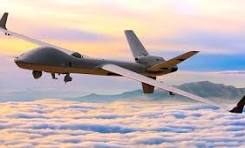
Drones played a decisive role in Operation Sindoor, signaling a paradigm shift in India’s approach to modern warfare. The deployment of both indigenous drones like ALS-50 and imported loitering munitions such as Harop and SkyStriker marks India’s increasing reliance on unmanned aerial combat systems (UACS).
Recent DRDO Breakthrough:
- ULPGM-V3 (Drone-Launched Precision-Guided Munition): Successfully tested, enabling India’s drones to conduct surgical strikes from a distance with high precision.
Mega Defence Deals Approved by DAC
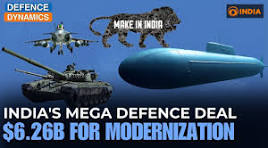
The Defence Acquisition Council (DAC) recently cleared procurements worth ₹1.05 lakh crore, focusing exclusively on indigenous sources. The strategic investments aim to equip India’s armed forces with state-of-the-art technology while nurturing domestic defence manufacturers.
Highlights:
- Electronic warfare systems
- Missile systems
- Armoured recovery vehicles
This reflects a dual objective: military modernization and economic stimulation through defence industrial growth.
Indigenous Production on the Rise
India’s defence production touched a record high of ₹1.27 lakh crore in FY 2023–24, a testament to its fast-growing manufacturing capabilities. Simultaneously, defence exports hit ₹23,622 crore in FY 2024–25, reflecting global trust in Indian weapon systems.
Major Projects:

- AK-203 Assault Rifles:
Indo-Russian Rifles Pvt Ltd is set to deliver 6.01 lakh rifles to Indian forces ahead of schedule. The rifles, manufactured in Amethi, are also being considered for export by 2030. - Advanced Towed Artillery Gun System (ATAGS):
The Indian government has approved the procurement of 307 ATAGS, an indigenously designed and developed heavy artillery gun with superior range and firepower. - Light Combat Helicopter (LCH) Prachand:
Contracts worth ₹62,700 crore were signed for 156 LCHs, boosting indigenous helicopter production for both the Indian Air Force and the Indian Army.
Strategic Technologies: Anti-Drone Warfare
With drones becoming an increasing threat, India’s development of ‘Bhargavastra’, a micro-rocket-based anti-drone system, represents a critical step in aerial defence. It is specially designed to neutralize swarm drones—an emerging threat in modern battlefields.

Implications and National Impact
These developments are more than just procurement milestones—they represent a strategic vision for India’s future as a global defence powerhouse.

✅ National Security:
- Enhanced deterrence through superior indigenous capabilities.
- Reduced dependency on foreign suppliers during geopolitical uncertainty.
✅ Economic Growth:
- Job creation in defence manufacturing hubs.
- Boost to ancillary industries (electronics, aerospace, metallurgy).
✅ Technological Innovation:
- Encouragement for public-private R&D partnerships.
- Emergence of India as a major military-tech exporter.
Challenges Ahead

- Speed of Deployment: Faster integration of new systems into armed forces is critical.
- Global Competition: Competing with global defence giants requires consistency in quality and delivery.
- Skill Development: Technical training must keep pace with new-age systems like AI-powered drones, cyber-defence units, and electronic warfare.
Conclusion: India’s Defence Future Is Indigenous and Invincible
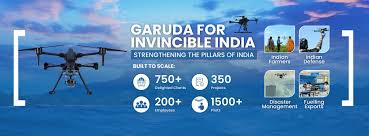
India’s recent strides in defence production, strategic procurement, and technological advancement are laying the foundation for a self-reliant, powerful, and agile military force. With visionary leadership, operational success like Operation Sindoor, and the successful implementation of Make in India in the defence sector, India is no longer just a buyer of arms—it’s emerging as a builder of security.
As we march toward Amrit Kaal, India’s defence ecosystem is becoming a symbol of national pride, technological excellence, and global military relevance.
Special Note
This blog is dedicated to the engineers, scientists, defence officials, armed personnel, and policymakers who are shaping India’s defence transformation—one innovation at a time.

https://thenews.blogmirror.in