
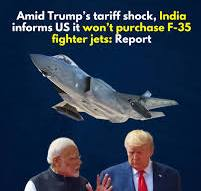
India Likely to Reject F-35 Deal, Prioritizes Indigenous AMCA Fighter Jet Program
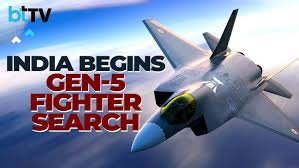
India is reportedly unlikely to proceed with the acquisition of American F-35 fighter jets, despite the global popularity of the fifth-generation aircraft. Instead, the country is intensifying efforts to develop its indigenous Advanced Medium Combat Aircraft (AMCA) program, aligning with its strategic vision of technological self-reliance under the “Make in India” initiative. This signals a major shift in India’s long-term defense planning and procurement approach.
AMCA: India’s Homegrown Fifth-Generation Fighter
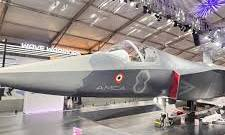
India’s AMCA project, led by the Aeronautical Development Agency (ADA) and Hindustan Aeronautics Limited (HAL), aims to produce a stealth, multi-role, fifth-generation combat aircraft. The AMCA will feature:
- Advanced stealth characteristics,
- Supercruise capability,
- AI-based avionics,
- Internal weapons bays,
- High maneuverability.
While the project is progressing, operational induction is not expected until around 2035, leaving a capability gap for the Indian Air Force (IAF) in the interim.
Stopgap Fighter Acquisition: A Tactical Necessity
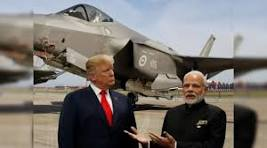
Given the long development timeline for the AMCA, the IAF is evaluating interim solutions to bridge the capability gap. Rather than purchasing the American F-35, India may consider:
- Limited acquisition of non-American fifth-generation jets,
- Enhanced variants of existing 4.5-generation aircraft like Rafale F4 or Su-57 (Russia),
- Or co-development options that allow technology transfer.
No Deal for the F-35: Strategic Calculations at Play
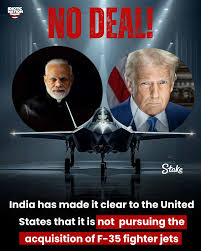
Despite the F-35’s cutting-edge capabilities, multiple reports indicate that India has no intention of buying the aircraft off the shelf. Several key reasons include:
- Technological Sovereignty: India prefers to build, not buy, critical military platforms.
- Limited Customization & ToT: The US rarely permits full technology transfer or deep customization for the F-35.
- Geopolitical Concerns: Tensions in trade relations — including 25% US tariffs imposed by the Trump administration — have cooled enthusiasm for big-ticket deals with Washington.
- High Cost: F-35 acquisition and lifecycle costs remain steep, making it less feasible given India’s budgetary priorities.
“Make in India”: Driving Indigenous Defense Capability
India’s defense strategy increasingly emphasizes domestic R&D and production, especially in aerospace. The AMCA fits squarely within this framework, and large-scale foreign purchases could undermine local development efforts. The government is actively:
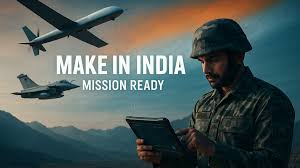
- Encouraging co-development partnerships over imports,
- Pushing for private sector involvement in military production,
- Boosting startups and DRDO initiatives in aerospace innovation.
US-India Relations: Defense Trade at a Crossroads
Recent trade tensions, including the aforementioned tariffs and US skepticism over India’s Russia ties, are believed to have impacted defense dialogue. While both nations remain strategic partners in the Indo-Pacific, the current signals from New Delhi reflect a more guarded approach to US defense platforms.
Potential Alternatives: Russia, France, and More
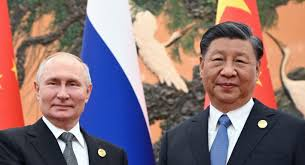
India could explore collaboration with other countries that are open to co-development and technology-sharing arrangements, such as:
- Russia: Joint ventures like the FGFA (Fifth Generation Fighter Aircraft) based on the Su-57 platform may be revisited.
- France: With its Rafale deal experience and openness to deeper partnerships, France remains a trusted partner.
- UK-Japan-Italy GCAP Program: Future tie-ups with the Global Combat Air Programme (GCAP) partners could also be explored.
Conclusion: India Charts Its Own Path in 5th-Gen Aviation

India’s decision to focus on the AMCA rather than acquiring the F-35 illustrates a clear and ambitious commitment to defense self-reliance. While stopgap solutions will be necessary to maintain combat readiness, the long-term trajectory centers around building a domestic fifth-generation capability — a strategic move that places India in elite global company alongside the US, China, and Russia.
vikram.patil42@gmail.com