Published on: July 26, 2025 Author: Vikram Patil Category: Technology | Artificial Intelligence Tags: ChatGPT, AI, OpenAI, Natural Language Processing, Chatbot, Generative AI
Introduction
In an era driven by technology and digital transformation, artificial intelligence (AI) has emerged as a game-changer across industries. Among the most influential AI innovations is ChatGPT, developed by OpenAI. This AI-powered chatbot has revolutionized the way humans interact with machines—whether for content creation, programming help, business communication, or everyday assistance.
This blog explores what ChatGPT is, how it works, its applications, benefits, limitations, and future potential.
What is ChatGPT?
ChatGPT stands for “Chat Generative Pre-trained Transformer.” It is a language model that uses deep learning to produce human-like responses based on the prompts it receives. Built on OpenAI’s GPT (Generative Pre-trained Transformer) architecture, ChatGPT can understand context, provide meaningful answers, and generate coherent text across countless topics.
The Evolution of ChatGPT
Version
Year Released
Key Highlights
GPT-1
2018
Proof of concept; limited public use
GPT-2
2019
Larger dataset; improved text generation
GPT-3
2020
Massive leap in fluency and coherence
ChatGPT (GPT-3.5)
2022
First conversational application
GPT-4
2023
Multimodal (text, image), more accurate
GPT-4o (“Omni”)
2024
Real-time voice & vision integration
How ChatGPT Works
ChatGPT works on transformer architecture, a deep learning model introduced by Google in 2017. It is trained on large datasets including books, websites, articles, and other text content.
Key Processes:
Pre-training: The model learns language patterns, grammar, facts, and reasoning from vast internet data.
Fine-tuning: It is further trained with human feedback to align with ethical and helpful responses.
Prompt & Response: When a user types a prompt, ChatGPT analyzes the context and generates a relevant reply using probabilistic models.
Applications of ChatGPT
1. Content Creation
Blog writing
Social media captions
Marketing copy
Poetry and storytelling
2. Customer Support
Automated FAQs
Real-time helpdesk bots
3. Education
Homework help
Tutoring in subjects like math, science, and coding
Language translation and grammar correction
4. Programming Assistance
Code generation
Debugging
Explaining logic in simple terms
5. Business Uses
Report summaries
Email drafting
Data analysis explanations
Benefits of ChatGPT
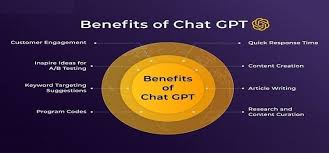
✅ 24/7 Availability: Always accessible for quick help
✅ Multilingual Support: Supports over 30+ languages
✅ Scalability: Useful for both individual users and large corporations
✅ Personalization: Can adapt to user style with context memory
✅ Cost-Effective: Reduces dependency on human agents for routine tasks
Limitations of ChatGPT
While ChatGPT is powerful, it is not without flaws:
❌ Factual Inaccuracy: May sometimes “hallucinate” or generate incorrect facts
❌ Lack of Real-Time Data: May not have updated information unless integrated with browsing tools
❌ Bias in Responses: Reflects biases present in its training data
❌ Over-Reliance: Users might depend on it without verifying answers
ChatGPT vs Other Chatbots
Feature
ChatGPT
Google Bard
Microsoft Copilot
Developer
OpenAI
Google
Microsoft (OpenAI-based)
Language Support
30+
40+
30+
Coding Help
✅
✅
✅
Multimodal (text + image + audio)
GPT-4o supports all
Bard supports images
Partial
Memory
GPT-4 with memory feature
No memory (as of 2025)
Yes, with limitations
ChatGPT for Bloggers and Writers
For content creators like you, ChatGPT is a goldmine:
💡 Idea Generation: Suggests blog topics and titles
✍️ Draft Writing: Generates entire blogs with SEO structure
🧹 Editing & Proofreading: Grammar, tone, and flow correction
🔗 Internal Linking: Suggests related post ideas for better engagement
Safety and Ethics
OpenAI has put significant effort into making ChatGPT safe, including:
Content moderation filters
Limitations on harmful or sensitive topics
User feedback loops to improve response quality
Transparent usage policies
However, human oversight remains essential in using AI responsibly.
Future of ChatGPT
The future holds exciting possibilities:
Real-time voice conversations and emotion recognition
Integration with smart homes, cars, and IoT devices
AI-powered research assistants
Enhanced personalization based on user behavior
Conclusion
ChatGPT is not just a chatbot—it’s a transformative tool that’s reshaping how we work, learn, create, and communicate. While it’s not perfect, its capabilities are continually evolving. Whether you’re a student, developer, teacher, marketer, or blogger, embracing ChatGPT can significantly enhance productivity and creativity.
Did You Know?
Over 180 million people use ChatGPT worldwide as of July 2025!
Share Your Thoughts!
Have you used ChatGPT for any tasks? What do you think about the role of AI in daily life? Drop a comment below or connect with us on https://thenews.blogmirror.in





nice